
≡ Menu

Adversity can come in many forms.  Adversity can be small things that build up over time, little shocks to the system. Adversity can be big things, like job loss, abuse, accidents, war, fighting, financial woes, relationship problems.

The list goes on. Being resilient is an admirable quality. Some people bounce back from adversity and negative events, stronger than ever. 

Have you heard the Kelly Clarkson song “Stronger” and in it, the lyrics say “What doesn’t kill you makes you stronger”? This is also a reference to Friedrich Nietzsche’s quote “That which does not kill us makes us stronger”.  To an extent, this has been proven to be true. Small adversities that we overcome do make us stronger.

However, that applies to people who naturally release their strong, negative response to a past event (this is also called trauma). These people are very good at changing their mindset and putting negative situations in the past, where they belong.

When they do so, they are able to release the full emotional palette that comes in an adverse time.If you aren’t one of those people or if you have suffered a more traumatic experience, the game changes.

The adversity that you “should” be able to get over and move on from, has morphed into a trauma. 

The negative memory plays over and over in your mind. As a result, you suffer varied symptoms.  In that case, what didn’t kill you did not make you stronger.  It made you weaker because, for whatever reason, the negative emotions did not release for you at the time.

When Adversity Morphs into Trauma

If you suffer from any of these symptoms, it might be a result of the effects of a trauma, big or small.

  • Anxiety
  • Memory flashbacks
  • Panic attacks
  • Depression
  • Lack of focus
  • Phobias

Let’s take an example of a client, a woman in her 30’s who suffered an unimaginable car accident when she was in her late teens.  Laura had glass embedded in her body. It took hours of surgery to repair the damage.

Even though there were only slight scars, the real damage was done to Laura’s mind. As a result of this, Laura had the symptoms of trauma, including anxiety and memory flashbacks.

She had difficulty driving in a car, even if she was a passenger. When she found herself in a car, driving, she recalled vividly the sound of the smashing metal.

She could “hear” the crunch of the breaking glass of the original accident.  Laura found it difficult to control her anxiety in other situations as well. She did not feel safe.

Her brother, who had been in the car at the time of the accident, did not have any symptoms of trauma.  He was able to shrug the event off. He believed that it was a one time thing, that the probability of another accident was slim.

Jack has only a dim memory of the event and does not attach much significance to it. It happened and it was no big deal.  He doesn’t understand why his sister just can’t “get over it”.

Reason #1:  You Feel Like You are Still in the Memory (Associated) of the Event

When a person is heavily associated into a memory of any event, they feel like they are right there…that it is occurring as if it is now…the feelings are the same feelings that were present at the original event. Laura was heavily associated with the car accident and her brother was not.

In order to lessen the grip of the event, it is necessary to mentally take a step back and put some distance between you and the image of the memory.

You can push the picture of the memory out in front of you and see yourself in the picture, instead of you seeing it through your own eyes, as if you were in the picture.

Reason #2:  You Have the Movie in Your Mind on Automatic Replay of the Event

A person who is able to recreate the traumatic event very well has a movie that plays in their mind; that replays the entire scenario over and over again.

Some people represent it as being in color, larger than life, moving.  If you take that movie in your mind and make it still, shrink it down, make it black and white, you will lessen the emotion associated with it.

Laura had a vivid image of the crash, complete with the sounds and could recreate it quickly in her mind, whenever she was triggered by being in a car.  Her brother had put a damper on his recollection of the event. He could drive a car and be in one with no hesitation.

Reason #3: You Are Stuck in Freeze Mode

Fight, flight or freeze…three responses to a highly stressful, traumatic, or negative situation.  Deep in our brains, we have a primal system that originally served to protect us. This system gave us responses that saved our ancestors lives….they could fight, they could run away or they could freeze.

Laura froze and so was in a stuck state, like an endless loop where the vivid memory is in constant replay mode, when triggered.   Her brother chose to fight, at least in his mind, and moved on.

Overcoming Adversity and Trauma

It isn’t easy for someone to live with the effects that they feel post trauma.  You might need help and there is no shame in that. There are many ways to deal with trauma.

  • Traditional talk therapy with a psychologist or psychiatrist
  • Cognitive behavioral therapy
  • Hypnosis
  • Emotional Freedom Training (tapping)
  • NLP (my personal favorite)

….and more….if it is just a small one, you might even be able to just use the tips that I have given you to make that change…now…mightn’t you? 

It is possible for massive growth to occur after a negative experience of adversity or trauma.  It can be a wake up call, if you let it be.  For others, it can cause a stuck state that causes them to relive the horror of it, over and over again.

The relationship that you have with yourself is so important. Even though you feel that you are powerless, you aren’t…really…you do have the power to choose a different outcome…just like that…


“Drive your own life…you deserve to, don’t you?”  Sherie Venner

3 comments


Money Secrets

Are you completely open and honest about where you spend your money with your partner?  If you are…congratulations! You are honoring your relationship.  Are you hiding money secrets in your relationship?  You are screwing up your relationship, even if you think that it is harmless.

Little White Lies about Money in your Relationship

I had a conversation the other day with a client.  We were talking about money and for some people, it is harder to talk about money than it is to talk about sex.  Teresa (not her real name) was very uncomfortable admitting that she is not up front and honest with her husband about where the money goes.

“I shouldn’t have to account for all of my money. I earn my own income” was her rationalization.  Even though each member of a couple may earn separate incomes, this way of thinking is full of pitfalls.

“I don’t need to tell him when I spend $5 on a latte.”  No, you don’t need to be that explicit…however, if you haven’t sat down and discussed how much disposable income you have (after bills and necessities are paid), you are in essence not being completely honest with your partner.

The Money Lies

Are you guilty of any of these money lies?

  • You buy clothes/shoes, take the tags off and hide your purchase deep inside your closet…then you bring it out and say “This old thing? I have had it forever”
  • You spend cash because it is harder to keep track of it and feel like you are getting away with something
  • You don’t acknowledge the debt that you have created or share that knowledge with your partner
  • You say that you spend less than you do; you round it down in order to make it appear less expensive
  • You buy on an installment plan and don’t tell
  • You secretly don’t think that it is any of your partner’s business how much money you spend
  • You lie about sticking to the budget that you have both agreed on

There are more…aren’t there?

What do Money Secrets Say About Your Relationship

Here is the problem that is created about lying about money, even in small ways, in your relationship.

  • It indicates a lack of trust in the relationship
  • It indicates a lack of commitment in the relationship
  • It indicates a lack of caring, on a deep level, for the other person
  • It indicates a lack of respect for yourself and for the other person
  • It indicates a lack of fidelity in the relationship, sometimes termed financial infidelity

Do you think that having a lack of trust, commitment, caring, and respect is harmful to a relationship?  It is…isn’t it?  If you have even one of those aspects in your relationship, it can cause a big enough crack so that the relationship will not survive.

Coming Clean with Your Partner about Your Money Secrets

In order to repair the damage that keeping money secrets in your relationship can do, you need to acknowledge them…first to yourself and then to your partner. If you are lying to yourself about the extent of lying that you are doing, it will be almost impossible to come clean to your partner.

Make a list of all of the areas that you have been keeping secrets about money.  There might not be many, there may be a lot…

If you are the partner who is on the receiving end of someone who is keeping secrets from you about money, you will need to talk to them about it, in a way that is kind. A lot of emotions can get stirred up when you are talking about money, so here are some tips about when to do it.

Make sure that you broach the subject when neither of you are tired or hungry

Find a quiet place where you won’t be disturbed…if necessary, go to a public place if you are concerned that it might lead to an argument

You might want to have a third person present, a trusted confidante of both you and your partner, if you are really concerned about their reaction to the news you’re presenting

Take a deep breath and remember that you are talking about numbers…take the emotion out of it…keep calm and carry forward

It can be painful to discuss money secrets, especially if you have created debt that your partner does not know about…nothing can be gained by lying, though.  Relationships can recover from financial infidelity, if both partners are willing to work through them and be forgiving

It takes time to rebuild that trust, that commitment, that respect, that deep level of caring and that feeling of financial fidelity…and you can do it…yes, you really can…

Forgive yourself, forgive your partner and make a pledge: “NO MORE SECRETS”.


"Drive your own life…you deserve to, don't you?"  Sherie Venner
22 comments

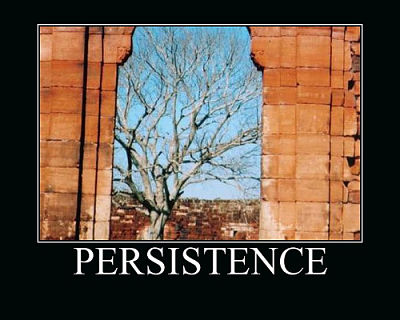
Being persistent is often defined as dogged determination, not letting go of a dream or ideal, giving it all you’ve got.  Another definition of persistent is refusing to give up in the face of obstacles or opposition. What do they mean to you, though?

Here is a favorite quote of mine by Edward Eggleston about being persistent.

“Persistent people begin their success where others end in failure.”

When you are persistent, you keep on going…remember the Energizer Bunny commercial, the little pink rabbit banging the drum…and he just kept going and going…that is being persistent!

I am not suggesting that you can be like that pink bunny…and please remember this…keeping going does not mean putting you or others at risk…there must be a reasonable amount of self care taken.

How Do You Know Lack of Persistence is a Problem?

There are a few ways to see the lack of being persistent in your life.

You have projects that are left undone.

You are very consistent at not reaching your goals, even the small ones.

You have had the same goals for years (weight loss, anyone?)

You have debt and/or your finances are a mess.

Your life does not match your dreams.

Yes, dreams and goals take time to achieve.  However, if you have had the SAME goals for years and you have not achieved them, then being persistent might be a problem for you.  The thing is, if you are consistently good at not achieving what you want, then you are not being persistent about getting what you want.

What’s Holding You Back From Being Persistent?

If you are having difficulty being consistent at any tasks in your life or persistent in achieving a reasonable, SMART goal, these factors may be at play.

Deep inside of our brains, there is a primal system that can be activated when we are in a high stress or threatening situation. It is wired into our nervous systems and is commonly referred to as the “flight” or “fight” system.  

When faced with a high stress situation or a threatening situation, our brain has three choices.  It can freeze and do nothing, stay and fight, or it can make you run.

Either way, when that happens, it is like there are alarm bells ringing through out your body.  This can generate several different fear responses.

Procrastination is a biggie, isn’t it?

One of the responses to the fight or flight alarm bell system is freezing. Procrastination is a “stuck” state…freezing…see that? That’s right.  When people procrastinate, they do so because of an underlying fear that generates that response. In essence, when stuck in fear and procrastination, it is like being a deer caught in the headlights.  They can’t move forward…at all.

Limiting beliefs lead people to inconsistencies

When limiting beliefs come into play, the way a person thinks narrows.  The thinking becomes like seeing through a long tunnel, with walls that curve over the top.  A person can’t see the big picture or the light at the end of the tunnel.

Negativity is a huge barrier to being persistent

It is very difficult to be persistent when one is in a negative mindset. Even if you are being successful, even if you are baby stepping your way to a brighter future, negative self talk sabotages.

What DO You Want to be Persistent About?

What is the something that if you could be, do or have it, would make your heart sing? Do you know what that is?  When you do…and deep inside…you do know, don’t you?

Set up strategies that will actually work and move you forward

Set reasonable goals…and remember this…your present reality is the default setting, the life you get when you are not actively pursuing the life you really want. Our brains are always seeking a goal, whether you set one consciously or not.

  • Say yes to the life you want
  • Say yes to your goals
  • Say yes to being better than you ever thought you could be
  • Say yes to being magnificent
  • Say yes to being persistent
  • Say yes to allowing

….because you deserve to succeed, don’t you?


“Drive your own life…you deserve to, don’t you?”  Sherie Venner


Image Credit: Luz Adriana Villa A.


7 comments

Friendship is important, in everyone’s life.  Friends provide a level of support that is different from the support that your family gives you.  A true friend sees the better part of you and if you are lucky, they let you know about it.

“Promise me you’ll always remember:  You’re braver than you believe, and stronger than you seem, and smarter than you think.” A. A. Milne (Christopher Robin to Pooh)

friendship


True Friendship Mirrors Our Best Back to Us

When Christopher Robin said that to Pooh, he was being a true friend.  He saw the best parts of the lovely little bear and he let him know.  

  • “You’re braver than you believe”
  • “You’re stronger than you seem”
  • “You’re smarter than you think”

Imagine…how powerful those three statements are.  Let that sink in and tell me, do you have a friend like that in your life? I have…several…and I am grateful for them.

They don’t let me get away with the crap that I am sometimes guilty of telling myself. It doesn’t happen often…that I need to be told…but when I do, it’s really nice to have a true friend who can call you on telling yourself that you are “less than”.

We all have had those moments…it is a moment of truth that can break the trance that we keep ourselves in.  We are shaken out of that negative mindset.  We are given a dose of reality through the eyes of another, a friend whose opinion we trust.

The true power of friendship shows itself in many different ways. When we have true friends, we know that we are not alone. They are people that we can share details of our lives with and not be judged.

Our friends support us in the decisions that we make, even if they disagree with our choices. They are honest and let us know what their opinions are.  

Being Your Own Best Friend

When all is said and done, each of us has a best friend.  And who do you think that is? It should be you…you should be your very best friend, the person that you can count on, no matter what.

In order to be your own best friend, you will need to do a few things differently…

  • Be kind to yourself
  • Recognize the good that is in you…that’s right…
  • Remember what you have learned about the past…keep the learnings…
  • Acknowledge your past emotions and let them go…now…
  • Forgive yourself and be tolerant…just like you do for some one else…
  • Treat yourself with respect
  • Allow yourself to feel the love that you have for you…deep inside…
  • Allow peace into your friendship with you…call a truce with your inner critic…

Friendship and friends are so very important.  Take the time to develop all of your friendships that are supportive of you.

Occasionally, we outgrow some friendships and need to let them go…if it is time…only you know…and when you do, let them go with love…and allow new friendships that align with your values into your life…

Friendships that nurture and support you deserve the time you give, to nurture and support them back. Acknowledge those friends…and be your own best friend because you can be…you know…

“Drive your own life…you deserve to, don’t you?”  Sherie Venner


Image Credit: Sujin Jetkasettakorn


26 comments

Listening to your inner critic can be the #2 cause of break ups. It certainly is the cause of misery for a lot of people, in a relationship with themselves. When you are self critical, it is difficult to maintain a functioning and thriving relationship with another person.

The Effect Listening to Your Inner Critic has on your Relationship

The state of our relationships can be a mirror of how we feel about ourselves.  When we feel critical of ourselves and are always telling ourselves that we are lacking in an area, it is easy to snap at the other person and be critical of them.  When we feel good about ourselves and recognize how valuable we are, we do not accept “less than” in our relationships.

Are you guilty of any of these behaviors?

Contempt is manifested by:

  • tone of voice
  • rolling of the eyes
  • snorting in derision
  • sighing
  • walking away from the other person while they are speaking
  • name calling

 Criticism is shown through:

  •  yelling
  •  tone of voice
  •  critical language patterns
  •  name calling
  •  blaming

Now, it is relatively simple to see when this behavior is being exhibited around you. What do you think happens when something similar happens inside your own mind?

Have you ever had the experience of doing something less than brilliant, rolling your eyes, snorting and then calling yourself a million names under the sun, in a tone of voice that is so contemptuous and critical??  Some times it is done out loud and sometimes it is done in the privacy of our own mind.

It is all damaging.  All of it…and yet, it is so common and so easy to do…you wouldn’t treat your best friend as badly as you treat yourself sometimes, would you?

Your Inner Critic Has a Positive Intent

What if the part of you that you perceive as your inner critic, that voice and attitude in your mind that tears you to shreds when you make a mistake…that’s right…that one…what if that part wanted something good for you?  How would you feel then?

Are you shaking your head yet?  Is it easy or hard for you to fathom that there might be a positive intent for such a brutal and nasty aspect of yourself?  

If we could imagine for just a moment that you really are doing the best you can…and I think you are…what purpose would the inner critic serve?

Perhaps…if I were to guess…it might be there to protect you.  If a part of you thought that it was protecting you from shame, rejection or embarrassment, it might yell at you, criticize you, blame you…do just about anything to keep you from making a fool of yourself or being seen as “less than” by other people.

Communicating with Your Inner Critic

Here is a simple way to communicate with your inner critic and listen to the message that it has for you.

Take 15 minutes (set a timer) and write.  Write with your dominant hand (for me it is my right hand) and ask yourself a question.  “Is there a higher purpose, a positive intent for that critical part of myself?”

Answer the question, writing with your non dominant hand (for me that is my left hand). Write down the answer that comes to mind…don’t judge it…write it down.  The key to doing this exercise is to go quickly, not stopping to criticize what you have put down on paper.

Continue, asking questions and writing the answers down.  Your questions will depend on the answers that part gives you.  When you get to the end of the questions and find the positive intent behind it, you might be surprised.  It might be “keeping you safe” or “protecting you” or “making sure that you are loved” or “keeping you from making a mistake”.  

When you find that higher intention that your inner critic wants for you, you can make peace.  You actually want the same thing and after all…that inner critic is your creation…it’s not real…it is just a representation of your negative thoughts.

Instead of killing your inner critic, see what the message is that it has for you. Embrace your inner critic, make friends…if you find it hard to do, you can imagine that you can change the sound of the negative voice inside your head, soften it’s tone, change the words…imagine how different saying “You’re a jerk” in a loud, harsh tone sounds from saying “You’re a jerk” in a slow, soft sensual voice…it doesn’t have the same impact, does it? : D

When you make friends with that negative part of yourself that you call the inner critic, you will see a difference in how you treat other people and how they treat you. Criticism will fade away and love will replace it.  People will not treat us any better than we treat ourselves. You need to set the example for them, and you can, can’t you?

"Drive your own life…you deserve to, don't you?"  Sherie Venner


Image Credit: David Castillo Dominici


6 comments